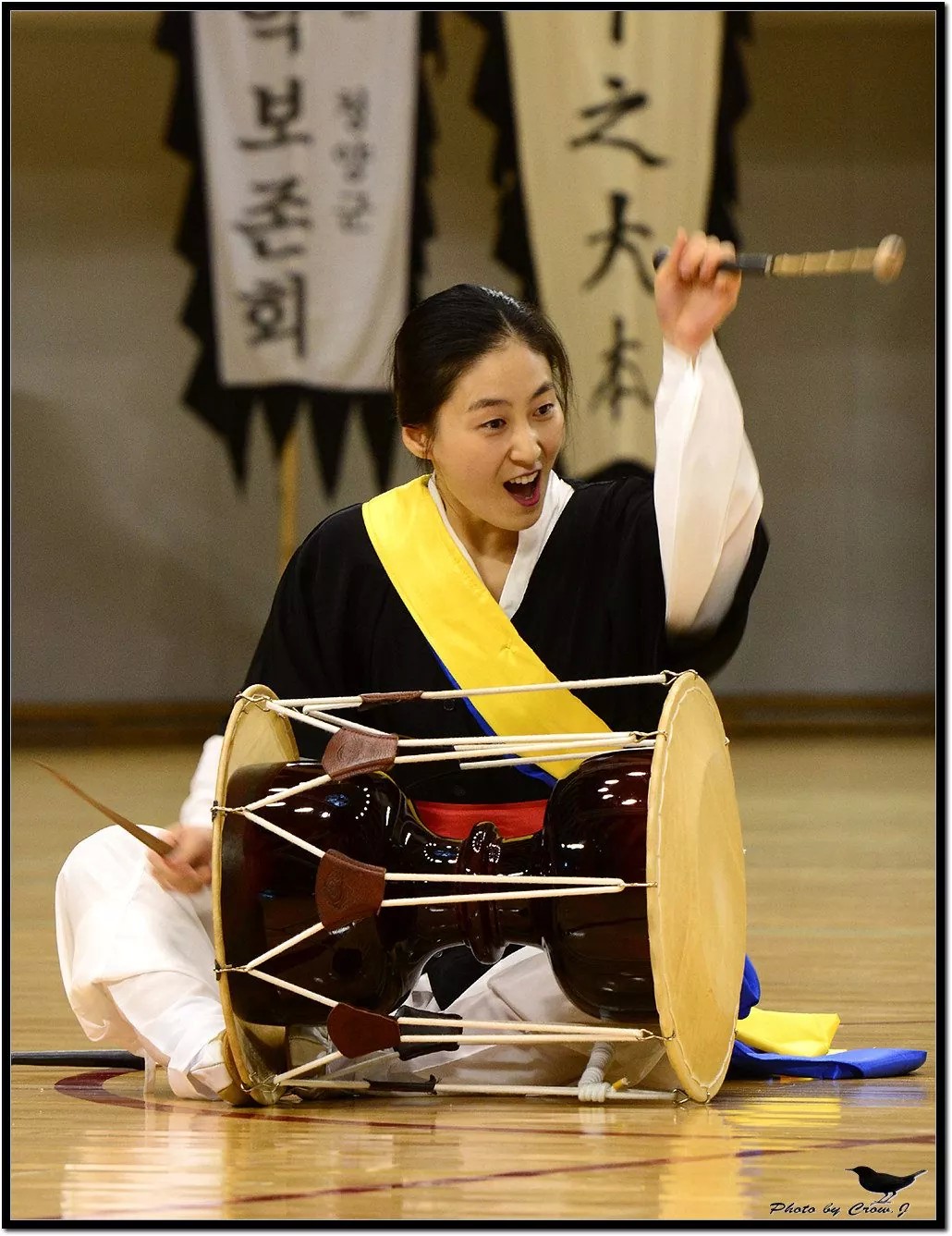
[외국인을 위한 한국 국악 가이드] 쉽게 배우는 전통 장단 4가지: 굿거리, 자진모리, 휘모리, 동살풀이
한국의 전통 음악인 국악(Gugak)의 매력에 빠진 외국인들이 늘어나고 있습니다. 국악의 핵심은 멜로디만큼이나 중요한 '장단(Jangdan)'에 있습니다. 장단은 서양 음악의 리듬(Rhythm)과 비슷하지만, 단순한 박자를 넘어 음악의 호흡과 감정까지 담아내는 한국만의 독특한 음악적 패턴입니다.
오늘은 외국인들도 쉽게 이해하고 따라 칠 수 있도록, 한국 전통 타악기인 장구(Janggu)를 기준으로 가장 기본적이고 널리 쓰이는 4가지 장단인 굿거리, 자진모리, 휘모리, 동살풀이에 대해 알아보고 구음(입으로 내는 소리) 악보를 함께 살펴보겠습니다.
💡 장구를 치기 전 알아야 할 기본 구음 (Basic Sounds)
서양 음악에 악보가 있다면, 한국 전통 음악에는 입으로 소리를 내며 리듬을 익히는 '구음(Gueum)'이 있습니다. 장단 악보를 읽기 위해 다음 3가지 기본 소리를 먼저 기억하세요.
- 덩 (Deong): 장구의 양쪽 면(북편과 채편)을 동시에 치는 소리입니다. 가장 강하고 깊은 소리가 납니다.
- 쿵 / 궁 (Kung / Gung): 왼쪽 면(북편)만 손이나 궁굴채로 치는 소리입니다. 베이스처럼 낮고 부드러운 소리입니다.
- 따 / 기덕 (Tta / Gideok): 오른쪽 면(채편)을 대나무 채로 치는 소리입니다. '따'는 날카롭게 한 번 치고, '기덕'은 채를 튕겨 장식음을 넣는 소리입니다.
- 더러러러 (Deoreoreoreo): 오른쪽 채편을 여러 번 굴려 치는 트레몰로 기법입니다.
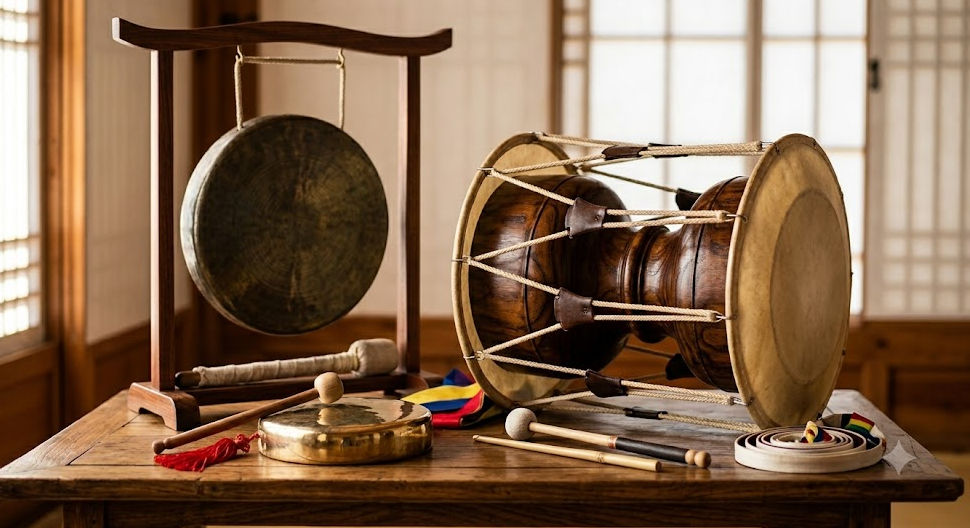
1. 굿거리 장단 (Gutgeori Jangdan)
"여유롭고 흥겨운 한국의 왈츠"
굿거리장단은 한국 전통 무용이나 판소리에서 가장 많이 쓰이는 대표적인 장단입니다. 서양 음악의 12/8박자(12/8 Time Signature)와 비슷하며, 느리지도 빠르지도 않은 중간 속도(Moderato)를 가집니다. 마치 어깨춤이 절로 나오는 여유롭고 둥글둥글한 느낌이 특징입니다.
🎼 굿거리장단 기본 구음 악보 덩 - 기덕 쿵 더러러러 / 쿵 - 기덕 쿵 - 더러러러 (Deong - Gideok Kung Deoreoreoreo / Kung - Gideok Kung - Deoreoreoreo)
연주 팁 (Tip): 첫 박자인 '덩'에 무게를 확실히 실어주고, '더러러러' 부분에서는 긴장을 풀며 물결이 흐르듯 부드럽게 연주하는 것이 포인트입니다.
2. 자진모리 장단 (Jajinmori Jangdan)
"경쾌하게 잰걸음으로 걷는 듯한 에너지"
'자진'이라는 말은 '잦다(빠르다)'라는 뜻입니다. 자진모리장단은 굿거리보다 훨씬 빠르고 역동적이며, 서양의 빠른 12/8박자 또는 4박자 계통으로 이해할 수 있습니다. 음악의 분위기가 고조되거나, 빠른 동작이 필요한 춤, 활기찬 농악에서 자주 등장합니다.
🎼 자진모리장단 기본 구음 악보 덩 - 쿵 - 쿵 - 덕 쿵 - (Deong - Kung - Kung - Deok Kung -)
연주 팁 (Tip): 네 개의 큰 박자(덩, 쿵, 쿵, 쿵)를 중심으로 리듬을 타야 합니다. 마치 발을 구르며 빠르게 달리는 느낌으로 텐션을 유지하세요. 외국인 학습자들이 가장 신나게 배우는 장단 중 하나입니다.
3. 휘모리 장단 (Hwimori Jangdan)
"폭풍우가 몰아치듯 강렬한 클라이맥스"
휘모리는 '휘몰아친다'는 뜻을 담고 있는 가장 빠른 장단(Presto)입니다. 서양의 빠른 4/4박자(4/4 Time Signature)에 해당하며, 음악의 마지막 클라이맥스 부분이나 극적인 긴장감을 표현할 때 쓰입니다. 사물놀이의 하이라이트에서 심장 박동을 극대화하는 리듬이 바로 이 휘모리입니다.
🎼 휘모리장단 기본 구음 악보 덩 - 덩 - 쿵 - 덕 쿵 - (또는 덩 덕 쿵 덕 쿵 덕 쿵 덕) (Deong - Deong - Kung - Deok Kung -)
연주 팁 (Tip): 속도가 매우 빠르기 때문에 손목의 힘을 최대한 빼야 합니다. 무조건 세게 치기보다는 리듬의 뼈대인 '덩'과 '쿵'의 악센트를 정확히 살려주는 것이 중요합니다.
4. 동살풀이 장단 (Dongsalpuri Jangdan)
"남도의 멋이 담긴 경쾌하고 쫀득한 4박자"
동살풀이는 주로 한국의 남쪽 지방(남도) 음악과 무속 음악에서 자주 쓰이는 매력적인 장단입니다. 서양 음악의 4/4박자와 완벽히 호환되지만, 특유의 당김음(Syncopation) 느낌이 있어 마치 재즈나 펑크 리듬처럼 '쫀득한' 그루브(Groove)를 만들어냅니다.
🎼 동살풀이장단 기본 구음 악보 덩 - 덩 - 덩 - 따 쿵 - (Deong - Deong - Deong - Tta Kung -)
연주 팁 (Tip): 세 번째 '덩' 다음에 나오는 '따 쿵' 부분이 리듬의 핵심입니다. 서양의 정박자(On-beat) 느낌과는 조금 다르게, 엇박자를 타듯 통통 튀는 느낌을 살려 연주해 보세요.
결론: 장단은 마음으로 타는 리듬입니다
한국의 장단을 처음 접하는 외국인이라면 서양의 메트로놈처럼 정확한 박자에 맞추려는 강박을 가질 수 있습니다. 하지만 국악의 장단은 고무줄처럼 늘어났다 줄어드는 '호흡(Breath)'이 가장 중요합니다.
오늘 소개한 굿거리의 여유로움, 자진모리의 경쾌함, 휘모리의 강렬함, 동살풀이의 그루브를 입으로 먼저 소리 내어 연습해 보세요. (구음 연습) 악보에 익숙해지는 순간, 한국 전통 음악의 진정한 아름다움을 느낄 수 있을 것입니다.
영어로 번역
English translation
[Guide to Korean traditional music for foreigners] Four easy-to-learn traditional rhythms: Gutgeori, Jajinmori, Hwimori, Dongsalpuri
A growing number of foreigners are becoming attracted to the traditional Korean music 'Gukak.' The core of Korean traditional music lies in the rhythm, which is as important as the melody. Jangdan is similar to the rhythm of Western music, but it is a Korean musical pattern that captures the breath and emotions of music beyond simple beats.
Today, we will learn about the four most basic and widely used rhythms based on janggu, a traditional Korean percussion instrument, Gutgeori, Jajinmori, Hwimori, and Dongsalpuri, and look at the old notes (mouth sound).
💡 Basic sounds you need to know before playing the double-headed drum
While Western music has sheet music, Korean traditional music has 'gold' to learn the rhythm by making sounds with your mouth. To read the sheet music, remember the following three basic sounds first.
Back: The sound of hitting both sides of the janggu at the same time. It makes the strongest and deepest sound.
Thump / Palace: The sound of hitting the left with only the hand or with the gutter. It is a low and soft sound like a bass.
Dda / Gidok: The sound of hitting the right with a bamboo stick. It's the sound of sharpening a pick stick, and a gideok is the sound of bouncing the stick to add a decorative sound.
Deoreoreoreoreoreoreore: Tremolo technique of rolling the right chaff several times.
1. Gutgeori rhythm
"Korean waltzes are comfortable and fun."
Gutgeori rhythm is a representative rhythm that is most often used in Korean traditional dance or pansori. It is similar to the 12/8th beat of Western music and boasts a medium speed that is neither slow nor fast. It is characterized by a comfortable and round feeling as if the shoulder dance comes out naturally.
🎼 Gutgeori rhythm basic oral score Deng - Christian kung duller / kung - Christian kung - duller (back - Christian kung ddur / kung - Christian kung - duller)
Game Tips: The key is to add weight to the first beat, 'dung', and gently relax and play as the waves flow.
2. Jajinmori rhythm (Jajinmori rhythm)
"Energy like walking in small steps"
Jajinmori rhythm is faster and faster than Gutgeori. It is much faster and more dynamic than Jajinmori rhythm, and can be understood as a Western-style fast 12/8 or 4-beat system. It is often seen in music styles, dances that require fast movements, and lively Nongak.
🎼 Jajinmori rhythm basic pitch score Deng - kung - kung - Duk kung - (Back - kung - kung - kung)
Performance Tips: Get the rhythm around the four beats (boom, boom, boom). Keep the tension high, like stomping your feet and running fast. It is one of the most interesting beats for a foreign learner.
3. Whimori rhythm
"Strong climax like a storm"
Whimori is the fastest rhythm (presto), which means "to move." It corresponds to the W's fast four-quarter time signature